ApexOne is the verifiable frontier-AI gateway. It gives developers, agents, and enterprises access to the world’s most advanced large language models through a single, unified, OpenAI-compatible API — with one guarantee no other gateway makes: you can verify that every request was served by the exact model you paid for.
Ordinary API aggregators ask you to trust them. ApexOne removes the need for trust — routing decisions, model identity, and billing are all independently verifiable.
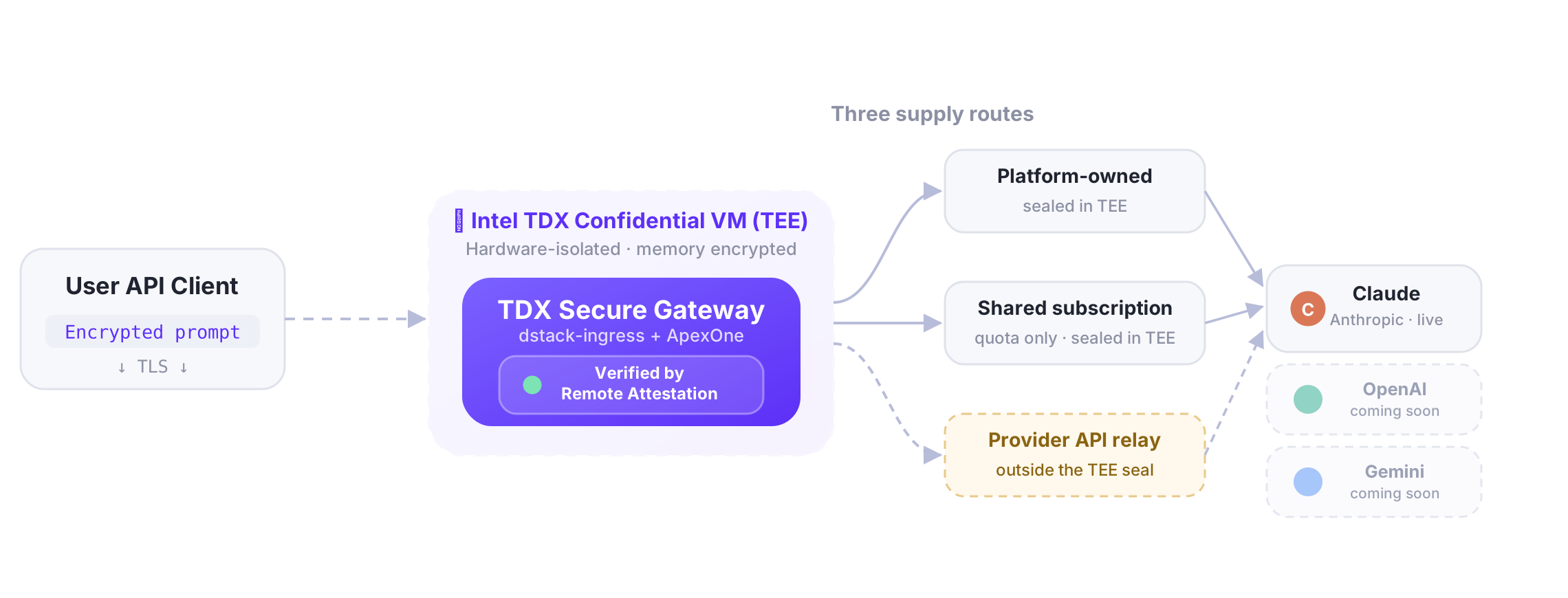
On platform-owned and shared-subscription routes, requests run inside a hardware-isolated
Trusted Execution Environment (Intel TDX) and are verified by remote attestation before being
routed to an upstream model. The provider-supplied API relay route sits outside this seal —
see how your requests are served.
The core problem with AI gateways today is silent substitution — providers can quietly
reroute your traffic to quantized, distilled, or downgraded models, and you have no way to know.
Every response records the exact model, version, and provider that served it, and on
TEE-sealed routes that record is backed by remote attestation. No silent swaps, no shadow
quantization.
22% of official pricing — and a bill you can check
Requests are billed at 22% of official API list pricing, per token. No subscription, no
minimum, no blended rates. The discount is the headline, but the part that’s hard to copy is
that every invoice line reconciles against an inference receipt — you can check what ran,
not just what you were charged.
Routing that survives an outage
Continuous monitoring of upstream availability, with automatic failover around outages and
degraded models before they reach your users — and every failover event is recorded in your
receipts.
Developer-first & enterprise-ready
Drop-in OpenAI compatibility, zero vendor lock-in, and audit-ready logs by default. Switch
underlying models with a one-line config change. Your prompts and responses are never used
for model training.
Model Identity Guarantee — every response carries a verifiable record of which model, which version, and which provider actually served it.
Inference Receipts — each request produces an auditable receipt (model, route, latency, token counts) you can retain for compliance, debugging, and cost reconciliation.
Transparent Routing — when automatic failover reroutes a request, the reroute is visible and logged, never hidden. You always know what ran and why.
Don’t take our word for it — see how to verify it yourself: genuine hardware, untampered code, proven on the spot.
Capacity reaches ApexOne through three routes. They differ in where your prompt travels, so we
spell each one out rather than making a single blanket claim.
Route
Where the prompt goes
Inside the TEE seal?
Platform-owned accounts
Routed inside an Intel TDX confidential VM — neither operators nor logs can read plaintext
Yes
Shared subscriptions
Providers contribute idle subscription quota only. Requests travel from the TEE straight to the upstream vendor and never touch any provider’s device
Yes
Provider API relay
Forwarded to an endpoint the provider supplied and operates